


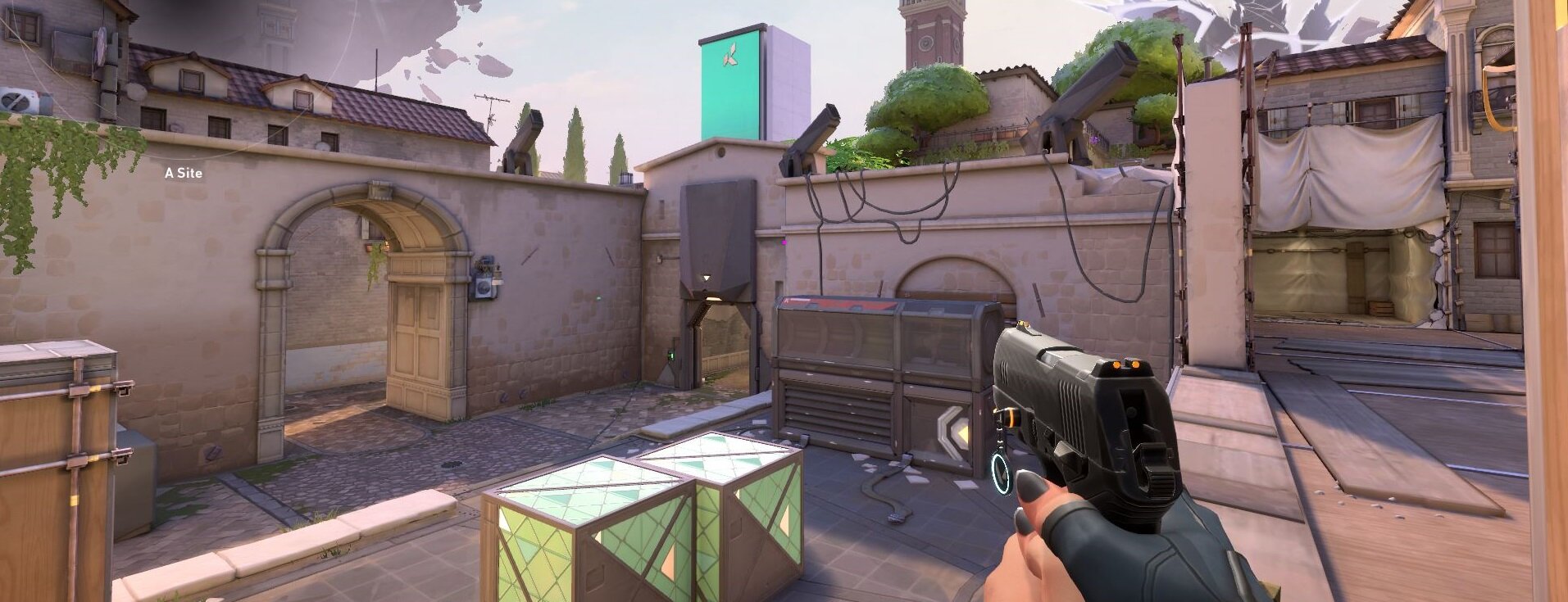
With so many different strategies and approaches to take into account, Maps in VALORANT can be hard to navigate. Knowing the details of each map, such as attacker routes and starting places, can mean the difference between victory and defeat.
In this piece, we’ll show you three tips for 3 maps in VALORANT that only a small number of players know. These tips will give you a leg up and help you move up the ranks. Let’s dive in!
Map 1: Ascent
Tip 1: Unconventional Pathing for Mid-Round Advantage
In ranked games of Ascent, the attack side has always been very important to the result. By taking unexpected paths, you can catch defenders off guard and gain a big edge.
For example, instead of using Jett’s dash ability to switch to close the market door during a B split, you can updraft dash into the market for a surprising flank. This causes distractions and diverts defenders’ attention from other pushes, making it easier for your team to take over the B site.
Tip 2: Leveraging Defaults for Mid Control
At the start of a round, teams use powerful strategies called “defaults” to take control of the map and collect information. Mid control is an important part of Ascent for both defenders and attackers. The “212” setup is a popular default strategy in Ascent, where two players take either site and one player takes control of the middle.
In this case, Jet is a good example because she can use her operator to get an early edge in mid. To get kills and take over the map, it’s important to learn how to use the enemy’s utility and have teammates break it.
Tip 3: Flexibility in Attackers’ Mid Defaults
For attackers, mid defaults should be a little more stacked than for defenders. This lets you clear angles held by defensive agents like a Jet with an Operator. The suggested default setup is a 131, with the Sentinel and smokes hiding on opposite sides of the map and the duelists and initiators in the middle.
This setup makes it possible to take either spot, depending on how many kills are made and how much information is gathered. Remember that you don’t have to stay in the first place you kill someone in.
Map 2: Bind
Tip 1: Spread Out and Gather Information
Due to its tight chokes, Bind can be hard, so both defenders and attackers need to know how to default. You can decide where to push and change your strategy based on enemy movements by spreading out and gathering information on the edges.
On Bind, it’s important to fight over the orbs because they’re a big part of ultimate-based strategies. Having an information initiator there during pushes can help get rid of defenders and take control of the map.
Tip 2: Gamble Stacking for Defense
Gamble stacking is a risky strategy in which all but one player on a team focuses on one site while the other player hides or anchors at another site. For Bind, you can choose either B or A for defence, which lets you use teleporters for fast rotations.
Cypher and Killjoy are good sentinels for solo side holds, but Chamber and Sage might not be as good. You should only use gamble stacking if you have a good anchor on the site you want to go to.Tip No. 3: Use Spawns to cut rotations
Tip 3: Using Spawns for Cutting Rotations
To get a free site, it is important to use defence or attacker spawns to cut rotations. For instance, pushing Defenders Spawn from Sands in Bind can surprise defenders and give you an edge.
It works especially well against agents who play spawn rotations more often, like Brimstone or Breach. By using five-man strategies that take advantage of these rotations, you can overwhelm the defenders and take over the site before they have a chance to respond.
Map 3: Haven
Tip 1: Dynamic A-Site Control
Because of Haven’s three bomb sites, attackers must be flexible and use pressure strategically. On the A-site, you need a dynamic control strategy that lets you attack from different angles at the same time.
For example, sending some players through A long while others push through A short or catwalk can split the attention of the defenders and open up chances for picks and entry fragging. Coordinate with your team to launch attacks with many different angles and overwhelm the defence.
Tip 2: Aggressive B-Site Control
For defenders on Haven, site control B is critical. B is a great opportunity for aggression because many teams expect defenders to play passively there.
Instead of staying back, use agents like Jett or Phoenix, who can quickly push and surprise attackers, in aggressive setups. To have the biggest impact, make sure to communicate with your teammates and use utility well.
Tip 3: Mid Control and Rotations
On Haven, mid control is essential because it enables quick rotations between sites and gives information about enemy movements. As the attackers, you should try to take control of the mid early in the round so you can put pressure on all three bombsites.
Use agents like Sova or Cypher to find out important information about where the enemy is. As defenders, it’s important to fight for mid control so attackers can’t easily move around and do split pushes. To hold mid and communicate enemy movements successfully, assign an agent with strong utility or an operator.
To do well in ranked matches in VALORANT, you have to know the maps inside and out. By using these three strategic tips for each map (Ascent, Bind, and Haven), you can get an edge over your opponents.
To get the most out of these strategies, don’t forget to try them out, change them up, and communicate with your team.
It’s important to remember that even though these tips might help, they should be changed based on the game conditions and the agents you and your teammates are using. Being adaptable in your strategy is essential to gaining victory because every match is different.
So, the next time you wait in queue for a VALORANT match, keep these tips in mind to show how well you know the map. Good luck, and may your skill at making plans help you win!
